
Introduction: A misunderstood molecule with remarkable healing potential
When most people hear the word ozone, they think of air pollution or the ozone layer, not healing. But in a medical setting, ozone becomes something entirely different: a powerful oxidative therapy that stimulates the body’s own repair mechanisms.
In this compelling episode of Wellness Focused, Dr. Bismah Irfan, MD, unpacks the science behind ozone therapy and why it’s emerging as a promising complementary treatment for individuals with chronic kidney disease (CKD).
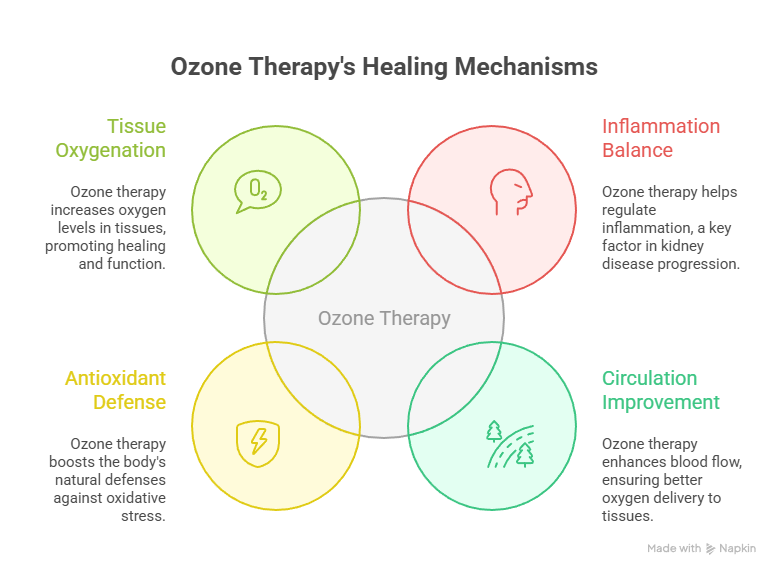
Ozone therapy is not about adding something “artificial” to the body. Instead, it’s about triggering the body’s innate healing intelligence, balancing inflammation, improving circulation, and enhancing the body’s antioxidant defenses.
For patients with kidney disease, who often face progressive inflammation, oxidative stress, declining tissue oxygenation, and chronic infections, these benefits can be transformative.
This blog explores the science, methods, safety considerations, and real-life outcomes of ozone therapy, showing why it may hold profound potential for kidney health when used as part of a holistic, carefully supervised treatment plan.
What Is Ozone Therapy?
Ozone (O₃) is a molecule made of three oxygen atoms. In medicine, ozone is used in controlled doses to stimulate powerful biological responses, including:
- Immune modulation
- Enhanced oxygen delivery
- Antimicrobial protection
- Activation of antioxidant pathways
- Tissue regeneration
Unlike pharmaceuticals, ozone works indirectly, by activating the body’s own repair systems.
Medical ozone therapy has been used for over 100 years in Europe and is supported by growing scientific evidence for its benefits in chronic inflammation, infection, pain, vascular disease, and immune dysregulation.
Why Ozone Therapy Matters for Kidney Disease
Chronic kidney disease is fundamentally a disease of:
- Oxidative stress
- Chronic inflammation
- Reduced oxygenation of kidney tissue
- Vascular damage
- Immune dysfunction
Ozone therapy directly targets these mechanisms.
Let’s break down how it works, and why it matters.
1. Ozone Reduces Chronic Inflammation
Inflammation is a major driver of CKD progression. It accelerates fibrosis, damages blood vessels, and impairs filtration.
Ozone therapy works by:
✔ Activating Nrf2 Pathways
This increases the production of antioxidant enzymes such as:
- Glutathione
- Catalase
- Superoxide dismutase
These enzymes counteract chronic inflammation and protect kidney cells.
✔ Reducing Pro-inflammatory Cytokines
Ozone decreases TNF-alpha, IL-6, and other inflammatory markers implicated in kidney disease.
✔ Modulating the Immune System
Rather than suppressing immunity (as steroids do), ozone gently balances immune activity, especially important in autoimmune contributors to CKD.
When inflammation is reduced, the kidneys experience less stress and injury, slowing disease progression.
2. Ozone Reduces Oxidative Stress, A Major Cause of CKD Progression
Oxidative stress occurs when free radicals overwhelm the body’s antioxidant reserves. This is a hallmark of kidney disease.
Ozone triggers a controlled, short-lived oxidative burst that:
- “Trains” the body to increase antioxidant production
- Improves mitochondrial function
- Enhances cellular resilience
This adaptive response is known as oxidative preconditioning and has been shown in research to reduce tissue damage in chronic disease.
3. Ozone Improves Oxygen Delivery and Microcirculation in the Kidneys
Many CKD patients suffer from renal hypoxia, poor oxygen delivery to kidney tissue caused by:
- Anemia
- Microvascular damage
- Endothelial dysfunction
- Diabetes
Ozone therapy enhances oxygenation in two major ways:
A. Improved Red Blood Cell Flexibility
Ozone makes red blood cells more supple, allowing them to travel more easily through tiny capillaries.
B. Increased 2,3-DPG Levels
This molecule helps red blood cells release oxygen more efficiently to tissues, critical for the highly vascular kidneys.
Better oxygenation means:
- Reduced tissue injury
- Better filtration
- Slower fibrosis
- Improved energy production
4. Ozone Supports Tissue Repair and Regeneration
Ozone has been shown to:
- Increase growth factors
- Stimulate stem cell activity
- Improve blood flow to damaged tissues
- Support mitochondrial repair
This regenerative effect can benefit kidneys exposed to years of inflammation, diabetes, hypertension, or toxin exposure.
5. Ozone Provides Antimicrobial Defense, Without Antibiotic Resistance
Infections are a hidden driver of kidney disease. Chronic or recurring infections in the:
- Sinuses
- Gut
- Urinary tract
- Oral cavity
- Bloodstream
can contribute to inflammation and immune dysregulation.
Ozone is broadly effective against:
- Bacteria
- Viruses
- Fungi
- Parasites
It does not lead to antibiotic resistance because its mechanism of action is oxidative rather than chemical.
For CKD patients with recurrent infections, or hidden infections not detected on standard testing, ozone can be a game changer.
Real-Life Example: A 70-Year-Old With Stage 4 CKD Who Stabilized With Ozone Therapy
One of the most compelling parts of ozone therapy is observing real-world outcomes.
Dr. Irfan shares the story of a 70-year-old man with stage 4 kidney disease, declining kidney function, worsening fatigue, and a high burden of inflammation.
His treatment included:
- Targeted ozone therapy
- Gut healing
- Anti-inflammatory nutrition
- Detoxification support
- Stress reduction strategies
- Microcirculation therapies
Over several months:
- His inflammation markers decreased
- His energy improved
- Proteinuria stabilized
- Kidney function plateaued instead of declining
While ozone therapy was not the only intervention, it played a major role in reversing oxidative stress and inflammation that had previously accelerated his decline.
This case underscores an important truth:
Kidney disease can stabilize when we target the processes driving damage, not just the symptoms.
Different Methods of Ozone Therapy and How They Support Kidney Health
Ozone therapy is not one-size-fits-all. Different routes offer different benefits.
Here are the main approaches:
1. Transdermal Ozone (“Ozone Sauna”)
This involves sitting in a steam cabinet while ozone and oxygen circulate around the body (but not inhaled).
Benefits:
- Improves circulation
- Enhances detoxification through the skin
- Reduces whole-body inflammation
- Supports lymphatic drainage
Helpful for patients with chronic joint pain, fluid retention, or systemic inflammation.
2. Rectal Ozone Insufflation
This is one of the safest, gentlest ways to introduce ozone into the body.
Benefits:
- Supports gut healing
- Reduces dysbiosis
- Modulates the immune system
- Lowers inflammation that contributes to kidney disease
Because gut health is directly connected to kidney function (the gut-kidney axis), this method is highly supportive for CKD patients.
3. Intravenous (IV) Ozone (MAH – Major Autohemotherapy)
This involves drawing a small amount of the patient’s blood, infusing it with ozone, and returning it to the body.
Benefits:
- Reduces systemic inflammation quickly
- Enhances oxygen delivery
- Boosts mitochondrial function
- Supports detoxification
- Improves circulation
IV ozone can be especially powerful for patients with:
- Autoimmune conditions
- Diabetes
- Hypertension
- Vascular disease
- Advanced inflammation
4. Extracorporeal Blood Ozone and Oxygenation (EBOO)
EBOO is the most advanced form of ozone therapy.
Blood is circulated through a filtration device that:
- Ozonates the blood
- Removes inflammatory toxins
- Improves oxygen saturation
- Filters harmful byproducts
- Enhances microcirculation
Why it matters for kidney patients:
CKD patients accumulate toxins the kidneys struggle to clear.
EBOO helps offload some of that burden by:
- Lowering inflammation
- Reducing circulating toxins
- Improving vascular health
- Enhancing tissue oxygenation
It’s a promising option for individuals with more advanced disease, though it must be done under strict medical supervision.
Why Safety Matters: Not All Patients Are Candidates for Ozone Therapy
Ozone therapy is safe when used correctly, but must be administered by a trained clinician.
✔ G6PD Testing is essential
Patients lacking G6PD enzyme are at risk for oxidative complications. Screening prevents adverse reactions.
✔ Dose matters
Ozone must be delivered at the correct concentration. Higher is not better.
✔ Ozone should never be inhaled
This can irritate the lungs, which is why medical professionals use airtight delivery systems.
✔ Medication interactions must be considered
A physician evaluates:
- Blood thinners
- Immunosuppressants
- Steroids
- Antioxidant supplements
✔ Patients must be monitored
Kidney disease requires careful assessment of:
- Blood pressure
- Hydration
- Electrolytes
- Hemodynamics
When applied appropriately, ozone becomes a powerful tool, not a risk.
How Ozone Fits Into a Functional Medicine Approach to Kidney Disease
Ozone is not a cure.
It is not a replacement for medication.
It is not used in isolation.
Instead, ozone therapy works best alongside a comprehensive Functional Medicine plan that includes:
- Gut healing
- Detoxification
- Personalized nutrition
- Stress regulation
- Mitochondrial support
- Blood pressure optimization
- Infection management
When these pieces work together, patients may see:
- More stable kidney function
- Reduced proteinuria
- Lower inflammation
- Improved energy
- Better vascular health
- Slower CKD progression
This integrative approach honors what modern medicine often overlooks:
The kidneys cannot heal when the rest of the body is inflamed and oxygen-deprived.
Three Key Takeaways
1. Powerful Healing Mechanism
Ozone therapy works by stimulating antioxidant defenses, improving mitochondrial function, enhancing oxygen delivery, and balancing inflammation, all essential for kidney health.
2. Kidney Support
By reducing oxidative stress, improving microcirculation, and addressing hidden infections, ozone therapy offers benefits that can slow kidney disease progression.
3. Safe & Personalized Treatment
When guided by a trained physician and preceded by screening tests such as G6PD, ozone therapy can be a safe and effective addition to a holistic kidney care plan.
Conclusion: A Promising Therapy for a Challenging Disease
Kidney disease is complex, progressive, and often overwhelming for patients, especially when conventional treatment focuses primarily on managing symptoms instead of addressing root causes.
Ozone therapy offers a different path.
By enhancing oxygenation, reducing inflammation, supporting detoxification, and strengthening the body’s natural antioxidant defenses, ozone therapy helps create the conditions necessary for healing. Combined with functional and holistic approaches, it has the potential to stabilize kidney function and improve overall vitality.
While not a standalone cure, ozone therapy is a powerful tool in the integrative treatment of kidney disease, one that bridges traditional nephrology with innovative, restorative medicine. Patients seeking to support their kidneys more comprehensively may find ozone therapy to be a meaningful and scientifically grounded addition to their personalized care.